Archive | master kunst educatie RSS feed for this section

Met liefde gemaakt.

28 dec

schermafbeelding-2016-12-28-om-16-16-57

Waarschijnlijk had je andere prioriteiten tweede Kerstdag. Ik heb er een heuse NTR marathon van gemaakt. Alle afleveringen van Tuinen van Verwondering achter elkaar. Ik was met Kerst in Nieuw Zeeland, Brazilië, Frankrijk, Noorwegen, Italië en 100 kilometer boven New York. Met Ernst Veen. Veen heeft zichzelf een geweldig pensioen gegeven en ging met een regisseur, cameraman en geluidsman op bezoek in de ’tuinen’ van de rijkste der aarde. Ik wil de hele serie zeker nog een keer op het grote scherm zien. De registratie van de kunstwerken zijn kunstwerken op zich. Ook de muziek bij  de prachtige beelden is van topkwaliteit.

In de ’tuin’ van de Nieuw Zeelander Gibbs zijn zelfs de dieren gekozen op hun uiterlijk. Of dat te ver gaat? Oordeel zelf. Hier. Gratis.

Ik kon het niet laten om het beeld even stil te zetten en deze met je te delen.

schermafbeelding-2016-12-26-om-12-43-02

Het landgoed van Gibbs is trouwens 1 dag per maand open voor het publiek. Vol tot april 2017. Reserveren doe je hier. Gratis.

schermafbeelding-2016-12-28-om-15-57-59

Eigenlijk wilde ik vandaag iets anders delen. Een zinnetje maar. Uit de documentaire over ontwerpster Eileen Gray;

“De waarde van iets is afhankelijk van de liefde waarmee het gemaakt is.”

schermafbeelding-2016-12-28-om-12-43-21

De documentaire is dit jaar nog te zien. Hier. Gratis.

Ook deze post is weer met liefde gemaakt. Gratis.

Maar voor wie eigenlijk?


Leerverrassing

21 dec

Tijdens mijn ontwerp onderzoek voor de master kunsteducatie kwam ik tot een belangrijk nieuw inzicht. Tijdens de eerste playtest van mijn prototype vertelde ik de leerlingen van groep 6 van basisschool Het Landje dat ik zelf ook student was, aan het leren en een experiment wilde doen. Ik vroeg ze of ze wisten wat een experiment was en samen besloten we dat dat het proberen van iets nieuws was wat niet kon mislukken. Ik merkte dat dat een hele veilige en uitdagende context bood. Ook voor mezelf. Sterker nog het voelde enorm bevrijdend en uitdagend.

Ik vraag me af wat er met de kwaliteit van onderwijs zou gebeuren als we maar twee ontwerpprincipes zouden toepassen:

  • onderwijs is vrijwillig
  • onderwijs is samen leren. Dus ook de docent.

Ik kwam laatst het woord ‘leerverrassing’ tegen.

Zullen we het woord onderwijs veranderen in leerverrassing?

Wikipedia definieert onderwijs zo:

Het onderwijs is het overbrengen van kennis, vaardigheden en attitudes met vooraf vastgelegde doelen. Daarbij houdt men rekening met een beginsituatie, volgt men een onderwijsstrategie en worden de resultaten geëvalueerd, onder meer door toetsing, zelfevaluatie en peerevaluatie (collegiale toetsing). Onderwijs wordt binnen een door de overheid bepaalde structuur gegeven door personen die daarvoor speciaal zijn opgeleid, zoals onderwijzers, leraren en docenten.

Cor Noltee definieert een leerverrassing  zo….en kan daar wel wat hulp bij gebruiken:

Een leerverrassing is het samen vrijwillig creëren van Kennis (wat je weet x wat je wilt x wat je kan x wat je gedaan hebt) vanuit een gezamenlijke uitdaging.

Nu bepaalt de overheid wie er les mag geven.

Bij een leerverrassing is dat een verrassing.


Pietje Precies

11 dec

Gisteren schreef ik over mijn nieuwe stoel en vanochtend las ik in mijn nieuwe boek. Mijn vader zou zeggen “Cor je hebt toch al een boek?”Dat klopt maar niet het nieuwste boek van Hans Janssen ‘Piet Mondriaan. Een nieuwe kunst voor een ongekend leven.’ Het eerste hoofdstuk neemt je mee naar Laren waar Mondriaan in een klein huisje op de hei schilderde en schreef. Na een periode van kwakkelende gezondheid was Mondriaan weer lekker bezig. En Janssen beschrijft uitvoerig de totstandkoming van een Mondriaan. Een die Mondriaan schilderde tussen juni en september 1918. ‘Gevangen’ in neutrale Nederland. Mondriaan was namelijk voor zijn zieke vader vanuit Parijs, waar hij woonde, naar Nederland gekomen maar durfde niet meer, ook niet via een omweg, naar Parijs te reizen. Of vond hij het eigenlijk wel fijn om in isolement met kwast te schilderen en vulpen of potlood te schrijven. Niet met een balpen want die kwam pas een jaar na de dood  van Mondriaan op de markt.

Al typend wil ik jullie nogmaals wijzen op het geweldige filmpje over de totstandkoming van het potlood. Nu met Nederlandse ondertiteling:

Maar ik dwaal af. Lezend over de totstandkoming van ‘De compositie met de grijze lijnen in vierkante positie’ heb ik minuten lang naar de kleine afdruk in het boek gekeken. Aan de hand meegenomen door Janssen die uitlegt over hoe Mondriaan zijn strepen trok, met welke hij begon en in welke volgorde. Mijn ogen over het kleine beeld sturend kreeg zelf het kleine plaatje ritme en diepte. Of kwam dat omdat ik meer zag door de beschrijving van Janssen? Zijn uitleg over de dikte van de lijnen, het licht schuren  ervan en het soms niet in een keer trekken van de lijnen maakte het een werkelijk kijkspektakel. Alsof ik naar een heldere sterrenhemel ligt te kijken in een gebied waar geen verlichting is.

22-piet-mondriaan-compositie-met-grijze-lijnen-19181

Ik kreeg zelfs zin om mezelf op te sluiten met een doek van 84,5 x 84,5 cm en het in 5 weken proberen na te maken. Zoals het team van Krabbé op TV doet met Mondriaans Victory Boogie Boogie.

Bekijk de geweldige aflevering hier. Heb overigens genoten van ALLE afleveringen.

Maar zoals zo vaak blijft de inspiratie hangen in een gevoel van ‘dat ga ik doen’.

Maar wat gebeurt er als ik er nu een bestel. Oké een van 80 x 80 cm dan. Niet zo Pietje precies maar precies genoeg om aan de slag te gaan.

schermafbeelding-2016-12-11-om-13-50-29

Everything is connected Part 21

10 nov

This year I explored the Dutch Design Week. For me it’s the event of the year and this year I took the time to see and read ALL works at the Design Academy Eindhoven graduation show. It took me 3 days to read the book (460 pages) and see my selection of work and speak to the alumni. I shared some of my favorite works.

I wrote about Stefan Bukkems’ ‘Senza’. A visual aid to help decipher human emotions.

And about Laura van de Kruijs’  ‘And I FEEL!’. Wooden message boards with compliment labels, love signs, an honesty stick and a mood meter allowing parents and kids to communicate without words.

It reminded me of one of my favorite internet based art works. I stumbled upon it in 2006 and it is called We Feel Fine by Jonathan Harris and Sepandar Kamvar. They call We Feel Fine “an exploration of human emotion on a global scale.”

But We Feel Fine is also an example of how technology is able to give meaning to data people share online. It shows clearly that everything can easily be connected without the connected ones being aware of it. Sharing online means being traceable.Big Brother is watching you.

Imagine what you would have to do to become untraceable.

Design Academy graduate Magnús Ingvar Ágústsson designed Vessel:

“Every digital transaction is traceable. That means that the shift to a cashless society would mean a total loss of privacy. The value of that privacy is underestimated. Being under constant surveillance leads to self-censorship, affecting your actions. Even digital solutions like Bitcoin can still potentially be monitored. Using cash remains the easiest way to ensure anonymity. ‘Vessel’ is a new form of physical payment for a future when cash as we know it is obsolete. Each Vessel bears a unique public ‘address’. Users can check the address online to make sure the given value is valid. The money then changes hands without further tracking.”

vessel-render-raudur-back-final_670


vessel-render-raudur-final_670


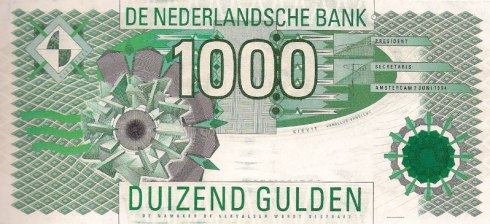
I wonder if Ágústsson knows the work of Jaap Drupsteen.

10gulden2


1000gulden_vz

And I wonder if Jaap and Magnús are connected.

I will send them a mail with a link to this post to find out.


Everything is connected Part 8

18 okt

Yesterday we ended up in China with a giant firework stairway to heaven. According to Tate Modern ‘Ways of Looking’ I could connect the work via the ‘Personal Approach – what do I bring?’ It says: All responses to works of art are conditioned by our different personal and social experiences. These cannot be ignored and should be our starting point when thinking about an artwork.

If I try to connect the work with myself and I ask myself ‘What does the work remind me of?’ one answer would be my ‘Supersafe and Cheap Fireworks Package’. But this would not fit the concept. Why not? Because I never sold the idea and I don’t think it’s art. So it’s not Part 8 but I’ll share it anyway.

Sometimes you do crazy things when you’re young. Especially if you’re keen on an idea that you think might well sell very well. Every two years I went to IAAPA, the International Fair for theme parks. Halls packed with the very latest in roller coasters, carousels, game boxes, fairground rides and so. Every year I came back with a box of leaflets and one year I brought fireworks glasses.

fireworks_glasses

No to protect my eyes. No. They were so-called spectrum glasses. If you put them on and looked at lights in the dark, you saw beautiful colors around the lights. Really amazing. Yes you have to see yourself to be excited. I get it.fireworkglasseseffect

You have to know I have nothing personal with fireworks, so I came up with the following, super safe and cheap fireworks package:

– 1 fireworks glasses

– 1 sparkler

sterretjes

– Packed in an air bubble envelope

airbubble_envelop


The idea worked as follows. On New Years Eve you go outside, light your sparkler, put on the firework glasses and start dancing on the air bubble envelope. The air bubble envelope might not make as much noise as the strikers of your neighbor but with your fireworks glasses looking at your burning sparkler is nothing less than spectacular. And they were safe and far less painful to your wallet.

This was a blast. Yes I knew for sure. We had only just to sell it.

We had to make appointments. Make sure that potential clients were able to experience it. My partner in crime Ron Vergeer wrote a great letter to 14 insurance companies and telecom companies. Ron had made them so curious that we scored 10 appointments.

This was a blast. Yes I knew for sure. We had only just to sell it.

We had been years in the latest technology. Radio controlled cars, chroma key virtual reality systems, Japanese sticker machines etc. Could a pair of paper glasses be our breakthrough?

This was a blast. Yes I knew for sure. We had only just to sell it.

And how to sell it? Simple. It is an idea for New Years Eve so with New Years Eve. With fireworks, champagne and  dutch donuts. In April we drove across the Netherlands with a big dish with, by Ron’s mother baked, dutch donuts, a few bottles of  Jip and Janneke champagne, champagne glasses, sparklers and of course the fireworks glasses. We sat at the table with the communication bosses of some of the largest advertisers in the Netherlands. (Yes even with Nationale Nederlanden Daniel)

After a short intro, I turned of the lights. Ron pulled the dish packed with dutch donuts from the plastic bag, put them on the table and sprinkled them with powdered sugar. I put on their fireworks glasses. Ron wrapped the foil from the bottle. I lit the sparklers and began to count.

10, 9, 8, 7, 6, 5, 4, 3, 2, 1 ……

With each count their mouths opened wider and wider. Quite easy to put a donut in.

Plop. The champagne flowed. The sparklers burned. The donuts tasted fantastic … .in april.

This was a blast. Yes I knew for sure. We had only just to sell it.

In 2000 a deadly firework exploded in a fireworks depot in a residential area in Enschede in the Netherlands. With one Bang it was done with our Blast. There was no brand in the Netherlands who wanted something to do with fireworks. Not even with the “safest fireworks package in the world” like I tried to explain.

The Failed Firework Glasses Project  is what New York based Chinese artist Cai Guo-Qiang Stairway reminds me of . But it’s not art. So part 8 is another connection. His name is Stefan Sagmeister. And he also sometimes says things by setting things on fire. The following stills are from his great TED talk and part of quote from his diary:

Fire is what connects Cai Guo-Qiang and Stefan Sagmeister. Fire as fuel for personal development.


Everything is connected Part 7

17 okt

schermafbeelding-2016-10-17-om-17-13-21

The connection with the object ‘Stairs’ by the mysterious 17th century artist Hercules Segers, narrated by John Malkovich, projected on a 9 meter wide stairs, is easy. I had the connection in the back of my mind but made room for Daniel’s fantastic tip about Hercules Segers. The original idea was to connect Bruce Nauman’s ‘Untitled’ with the work of New York based Chinese artist Cai Guo-Qiang. He found a unique way to express his love to his grandmother: a gigantic staircase in the air.

VID: Dream Of Ladder To The Heavens Now Reality

Pic shows: The firework display fullfiled by a Chinese artist in the shape of a ladder that extends up into the sky. A well-known Chinese artist and pyrotechnic enthusiast this week fulfilled his decades-old dream of creating a firework display in the shape of a ladder that extends up into the sky. Cai Guo-Qiang, a native Quanzhou City of south-east China’s Fujian Province, put on display the art piece known as the “Sky Ladder” in his Chinese hometown. Having grown up as a child in the coastal city just across the Straits from Taiwan, Cai became accustomed to hearing explosions as Mainland artillery batteries traded fire with Nationalist batteries on the other side. It left him with a fascination of explosions and although his latest project lasted only 80 seconds it took weeks of hard work to realise and years of planning. The 57-year-old’s “Sky Ladder” is a 500 metre-high structure made from wires laced with fireworks, which was hoisted into the sky by a large weather balloon. Guoqiang’s team of hundreds of experts spent countless hours planning the project, but for the artist himself, “Sky Ladder” has been a 21-year-long dream. Guoqiang’s first attempt at his “Sky Ladder” came in 1994, when he launched a similar balloon into the sky. However, strong winds twice felled his balloon, causing him to ultimately suspend the project. When Shanghai hosted the APEC summit in 2001, Guoqiang planned to launch the “Sky Ladder” once more, but his plans fell through once more after the events of September 11 restricted access to the skies. This week, Guoqiang dedicated the successful launch of his “Sky Ladder” fireworks to his grandmother, a very important individual in his life who recently celebrated her 100th birthday. Guoqiang says his grandmother was and always will be the first collector of his art, constantly keeping his drawings since the age of two. (ends)

The stunning photograph shows the 1,650ft ladder, which was made with fireworks, stretch right up into the sky in Quanzhou, south-eastern China. The artist who is originally from the city of Quanzhou.

schermafbeelding-2016-10-17-om-17-23-23

You can see the documentary ‘Sky Ladder’ on Netflix and the trailer here:


Everything is connected Part 6

16 okt

schermafbeelding-2016-10-15-om-12-29-29

The last days I was searching for a new bloggoal. Writing in English is something completely different and sometimes feels as work instead of a flow experience. I started writing in the early morning as a kind of active replacement for meditation inspired by the ‘Morning paper exercise’ by Julia Cameron from het book The Inner Artist. The exercise is simple, every morning the first thing I did was write one page by hand in a book without lines. What I wrote? Just what came to mind and if nothing came I wrote just that. I kept writing till the page was full. Then I teared the page out and burned it. It is an excellent exercise to clear your head of ’to do’ lists or ‘did not do’ lists. I wrote nearly 3 years and never read what I wrote. That changed when I started to blog on January 26 2013, the beginning of my blog experiment. Every day I shared a story about Design Thinging. About empathy, creativity and prototyping. Every day I got out of bed at 6.00 and published before 7.00 Those were the rules of my voluntary attempt to overcome these unnecessary obstacles. Yesterday my new bloggoal became clear. An art journey in 365 days in which I will try to connect the posts based on ‘Ways of Looking’ by Tate Modern.

My last post was about Bruce Nauman’s ‘Untitled’365art_connections-007

Via the object ‘Stairs’ I will connect it with the mysterious 17th century artist Hercules Segers. Here the video for an exhibition in the Amsterdam Rijksmuseum. Narrated by John Malkovich, projected on a 9 meter wide stairs.


<p><a href=”https://vimeo.com/187151269″>Hercules Segers, an introduction / Video Installation Rijksmuseum</a> from <a href=”https://vimeo.com/christianborstlap”>Part of a Bigger Plan</a> on <a href=”https://vimeo.com”>Vimeo</a&gt;.</p>

Thanks Daniel Doornhein for the tip.

Everything is connected Part 5

15 okt

I’ve tried to connect to last 4 posts with each other. It started with the new course Art Histories we developed at the University of the Arts in Utrecht, the University I recently got my master degree in art education. The following post I wrote with a pencil because I didn’t have my computer to type. Then I connected that post with the pencil from ‘I, Pencil: the movie’ which connected me with John Baldesari’s pencil and via Baldesari’s dots with the ‘I’m sold’ red dots at Cees de Vries’ exhibition.

So here I am at gallery Arte Damiate on the Kuipershaven in Dordrecht, the Netherlands. I look around and see Cees’ paintings with textcards with red dots. To make the next step one criteria narrows down the connections; it has to be an art connection and I have to use Tate Modern’s ‘Ways of Looking’ to make the connection. This means I can connect via:

  • the object
  • the subject
  • the context

schermafbeelding-2016-10-05-om-11-07-00

I could connect one of the works via the proces of Cees’ work by showing you the “art in progress’ video I made of one of his last paintings:

The above video shows the step (a week) by step ‘making of’ the painting.

My goal of today was to connect with Bruce Nauman’s work and especially his Oliver Ranch Installation “Untitled”, 1998-99 (Cast concrete staircase).

bruce_nauman_stairs

I connected the ‘step by step’ proces I showed in the video with the different sized steps of Nauman’s cast concrete staircase. Why? Because yesterday I shared this work with my three Nature Capital co-workshop designers. I shared it because I think it is an brilliant (stair)case of how to make use of the natural surrounding resulting in an absolute mindful walk in nature. Or like Nauman says:

“You’re very aware as you walk up or down that your body has to make an adjustment at each step. And so, you have to figure when you can change your weight, and where your foot is going to be placed, and how high you step, or how far down you step. And nothing is so great that you have to struggle with it, but everything is a little bit of an adjustment. So, you’re kept a little off-balance all the time, adjusting yourself.”

Asking Nauman what makes this stairway a work of art and not just a bunch of stairs, Nauman replies:

“I guess it’s the intention that changes it from a stairway to a stairway as a work of art—because I said so! (LAUGHS).”

You can read the whole interview here and the connections I’ve made so far here:

Everything is connected Part 3

8 okt

The last still image I shared on this blog was a still I took of the world of graphite. Graphite from a pencil from the movie ‘I, Pencil: the movie’.

schermafbeelding-2016-10-06-om-07-34-40

The first shot from the movie that my good friend Daniel showed me later that day was a pencil.

schermafbeelding-2016-10-08-om-11-06-36

I did’t see it at first. I saw it when I, later that evening showed the movie to another good friend Walter. Walter was just about to watch The Godfather but he didn’t because I intervened with the movie Daniel showed me earlier. Of course there was a shot about the Godfather in it. Walter and I looked at each other in awwwww.

schermafbeelding-2016-10-07-om-12-36-33

Everything is connected for those who are connected.

John Baldesari is also connecting the dots:

Schermafbeelding 2016-10-08 om 11.23.04.png

And not making boring art anymore.

Boring? This reminds me of the slide by Souwie de Wijn in her kick off (Ass) Art Histories lecture last Tuesday.

schermafbeelding-2016-10-08-om-11-25-55

It’s time for a Do-Nut.

Do or Do Not.

There is no try.

Have a great weekend.

Which reminds me of……..


Everything is connected.

5 okt

Schermafbeelding 2016-04-18 om 06.52.10

Yesterday we (HKU) had a fantastic start of a new course called Art Histories. In 10 weeks all second year Art & Economics students read the great book ‘What are you looking at? 150 years of Modern Art in the Blink of an Eye’ by Will Gompertz. At the end they will write a research report in which they connect themselves in five steps with ‘Father of all’ Cézanne. These connections can be pieces of art or makers from the book or pieces of art or makers the students choose themselves. They connect themselves via a contemporary maker in five steps with Cézanne, each making a unique history art journey. Every week students read two chapters from the book and select 6 works of art/makers and print them on A5 cards. Before they start playing with the cards they will get a lecture in which an example personal art journey from one of our teachers will be given. Connecting Cézanne with a contemporary maker and themselve. In making the connecting every connection has to be validated by at least one source. We gave them Tate’s Ways of Looking to help them what kind of connection their is between the maker-maker/maker-piece of art/pieces of art. The connection can be based on:

  • the object
  • the subject
  • the context

schermafbeelding-2016-10-05-om-11-07-00

schermafbeelding-2016-10-05-om-11-07-08schermafbeelding-2016-10-05-om-11-07-17

You can download the cards here.

In the 45 minutes workshop after the lecture we discussed the cards of the students. Then the had to make a 5 steps network starting with Cézanne. One of the students made a card with The Joker (Heath Ledger) and another one had Piet Mondrian. Do you know how they connected the two? Isolation. Then another student replaced Piet by Vincent van Gogh and called the connection “Insanity”.

It was an instructive and fun way to learn more about each other and art history. The students that did not make their homework were disappointed. They could not connect, could not play.

Game Over. New game next Tuesday.